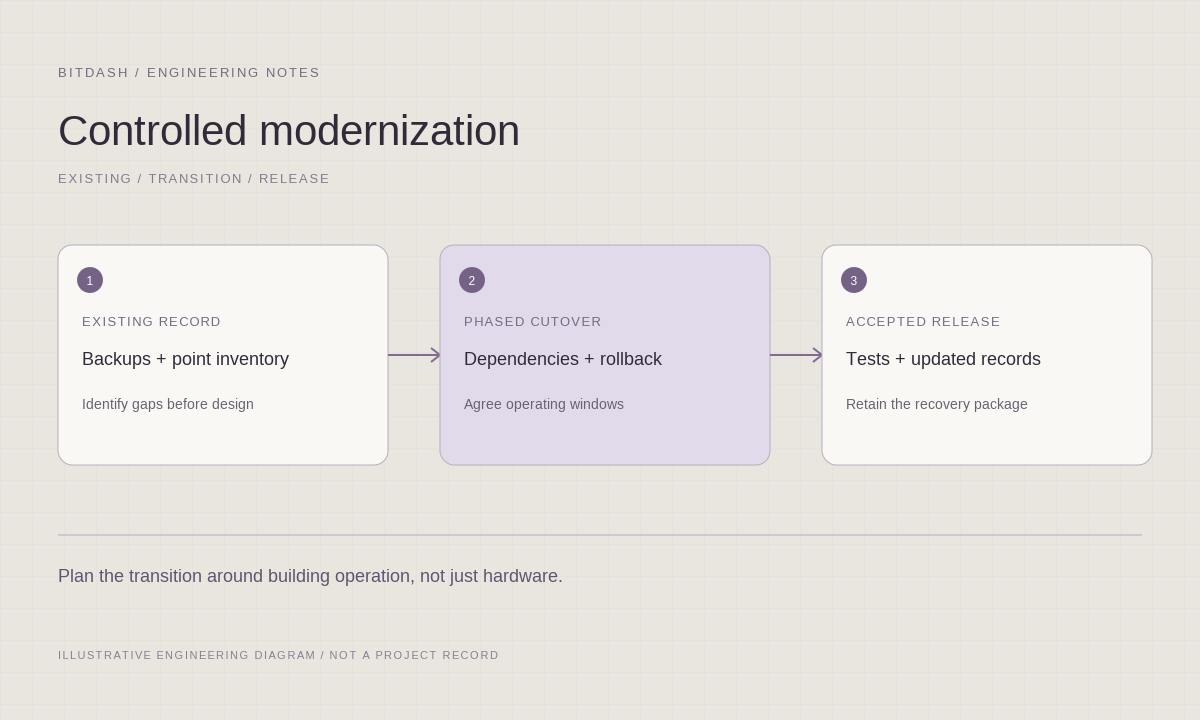
The migration plan should preserve the knowledge of how the building operates, not just a list of points.
Separate confirmed information from assumptions
Build an inventory from available backups, drawings, controller details, interface maps and operator knowledge. Record which information is current and which needs field or vendor confirmation. An old schematic may still explain the design while missing later changes.
Identify functions that matter to continued operation: schedules, sequences, alarms, histories, graphics, packaged-equipment interfaces and external data consumers. Include the responsibilities for any system that will remain in service during the transition.
Map functions before choosing the cutover
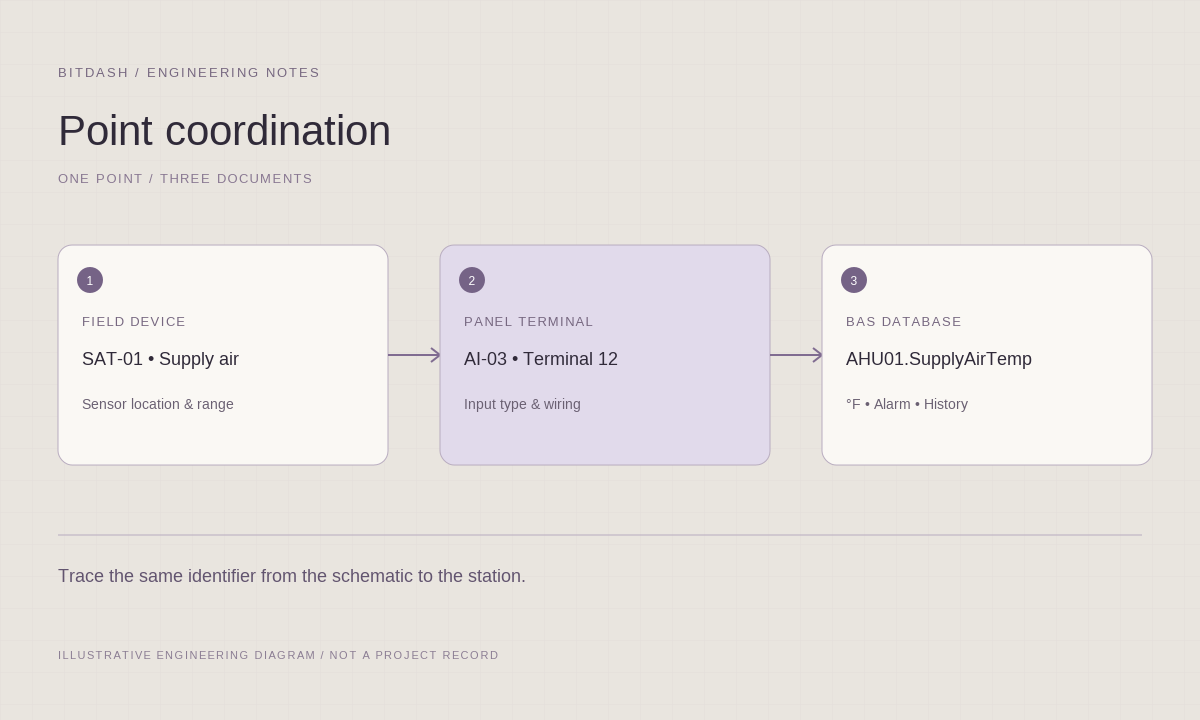
For each retained function, identify its source, target, dependencies and verification method. Decide which point names, historical records and operator conventions need to be preserved. Note differences between native controller functions and what a supervisory interface exposes.
A network connection does not establish that every existing application can be transferred or reprogrammed. Confirm the target platform, available tools, licenses and manufacturer-supported compatibility before treating a transition as an approved path.
Plan releases around operating constraints
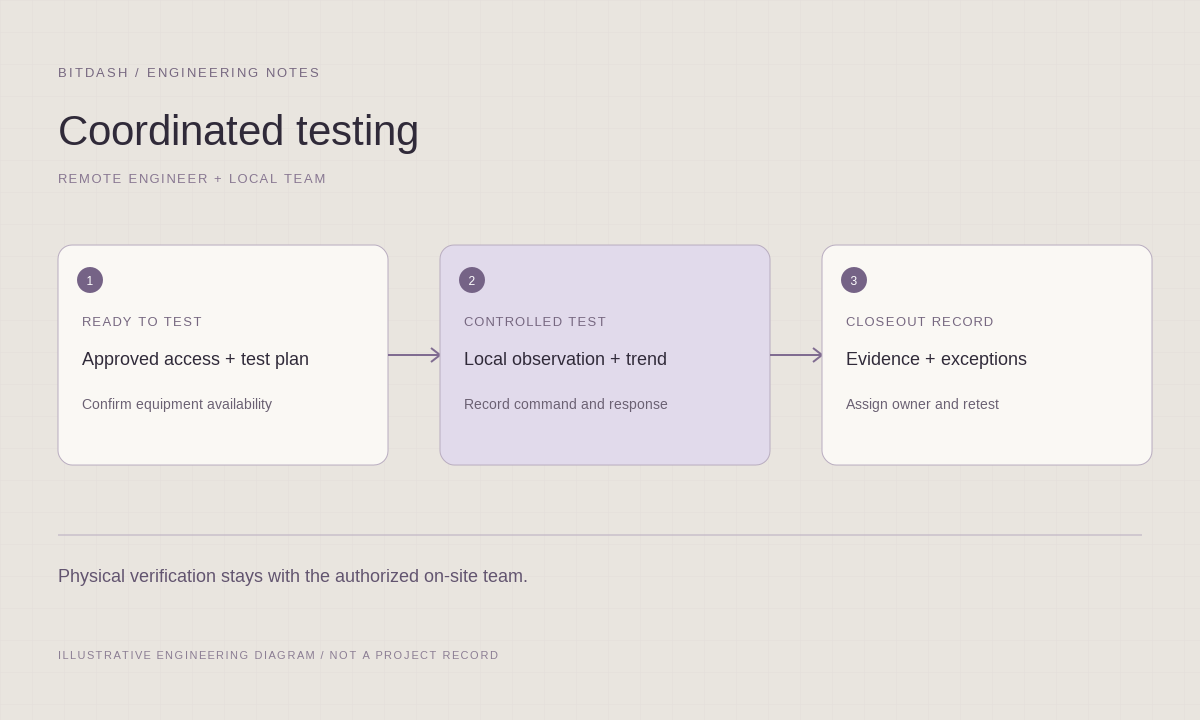
Group the work into manageable releases with agreed access windows and local support. Define the backup, rollback conditions and acceptance checks for each group. Clarify what will be temporarily unavailable and how the team will confirm normal operation afterward.
Coordinate operator graphics and alarm changes with the same release plan. Converting a database while leaving stale navigation or obsolete alarm references can make an otherwise successful technical change difficult to operate.
Keep the new record aligned
After each phase, update the inventory, point map, graphics references and current backups. Record remaining exceptions and the actions needed before the next release. Give operators the guidance needed to understand changes in navigation or behavior.
Bitdash can support the existing-system review, mapping, phased release coordination and post-change verification. The final engineering scope should describe the systems involved, retained functions and the evidence required for acceptance.
| Migration record | Question to resolve | Acceptance evidence |
|---|---|---|
| Inventory | What is installed and what is verified? | Model, version and backup record |
| Function map | What behavior or information must remain? | Source-to-target and test reference |
| Release plan | How will each phase be introduced? | Window, local owner and rollback conditions |
| Closeout | What changed and what is still open? | Updated files and verification log |
A practical review checklist
- Retained functions and external dependencies are identified.
- Compatibility and tooling are confirmed before the path is approved.
- Each phase has a backup, acceptance check and responsible owner.
This guide describes an engineering approach. Final design values, testing responsibilities and deliverables follow the approved project scope.