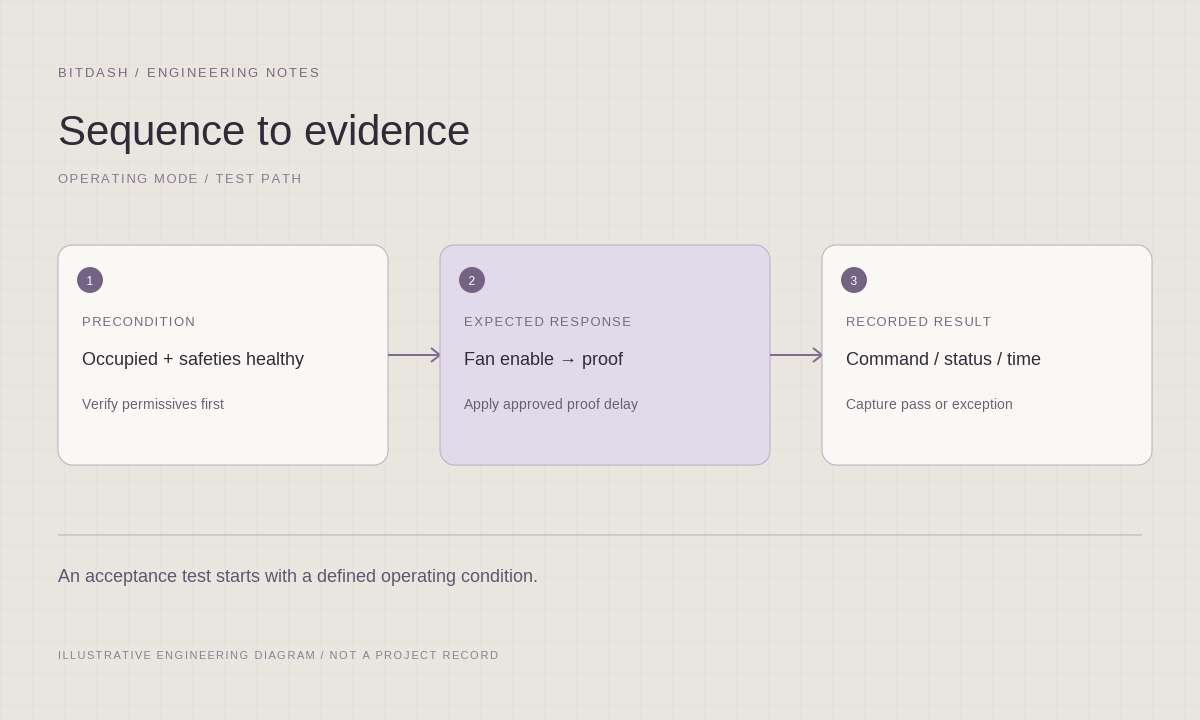
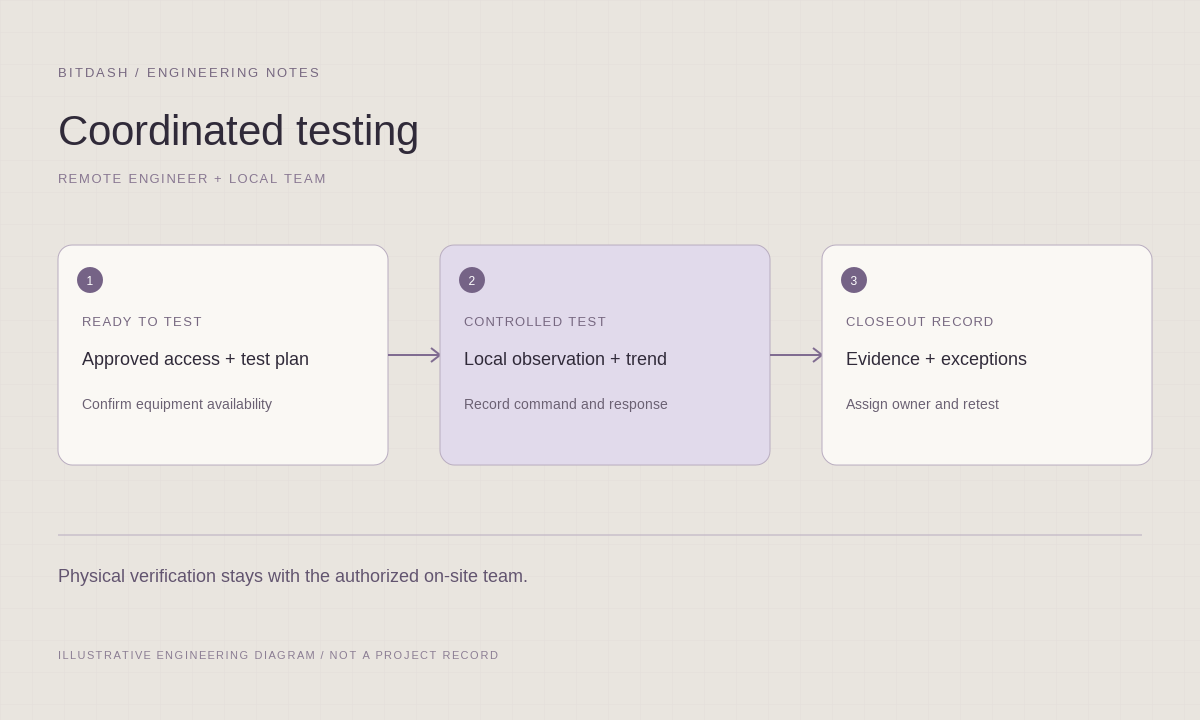
Remote observation and local physical verification work together. Agree who establishes conditions, operates equipment and accepts the result.
Define readiness before the test window
Confirm the approved sequence, accessible point database, current backups and software revision. Check that graphics and histories include the values needed to interpret the test. Identify the local contact, test lead, acceptance reviewer and escalation path.
A readiness review should expose missing conditions while there is still time to resolve them. Examples include incomplete sensor calibration, unavailable packaged-unit data, outstanding wiring checks or a trend interval that cannot show the event being tested.
Assign the physical and remote tasks
The authorized local team establishes physical readiness and operates or observes equipment as required by the agreed procedure. Remote engineering reviews controller behavior, trends, software configuration and recorded exceptions. Both sides need a shared equipment naming convention and a reliable way to communicate during the test.
Make the boundary explicit for sensor checks, actuator stroke verification, fan proof and mechanical response. An output value displayed on a graphic is not, by itself, proof that a valve moved or a fan delivered airflow.
Capture the condition and the response
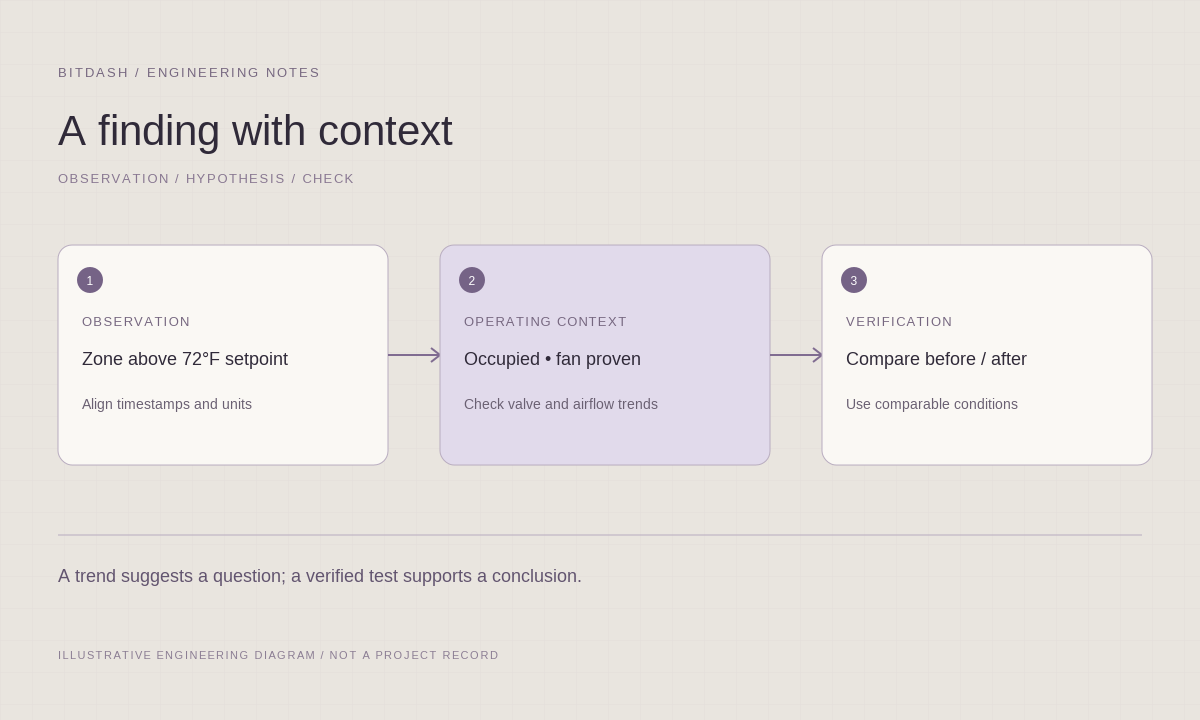
A useful test record includes the requirement, starting state, action, expected response, observed response and result. Use timestamped trends where appropriate and identify the associated software revision. Temperature evidence should be labeled in °F and distinguish setpoints from measured values.
When an exception appears, record the observation before assigning a cause. Software, wiring, sensor, mechanical and interface issues may need different owners. Link the issue to its test step and retain enough evidence for a focused retest.
Close with a usable handover
After corrections, retest the affected requirements and record the result. Identify items accepted with qualification and items still open. Coordinate the current backup, change notes, graphic revisions and operator guidance with the acceptance process.
Bitdash’s remote commissioning support can include readiness reviews, scripts, observation, issue tracking and operator walkthroughs. The final scope defines the systems included, on-site responsibilities and agreed closeout records.
| Stage | Remote engineering | Local / project team |
|---|---|---|
| Readiness | Review software, points and test plan | Confirm field readiness and test authorization |
| Point checks | Observe values, scaling and status | Verify measurements, wiring and response |
| Functional tests | Review logic and trend evidence | Establish conditions and observe equipment |
| Closeout | Compile software and technical records | Review acceptance and remaining actions |
A practical review checklist
- The test references an approved sequence revision.
- Physical checks and equipment operation have designated owners.
- Deficiencies, retests and current backups are traceable.
This guide describes an engineering approach. Final design values, testing responsibilities and deliverables follow the approved project scope.