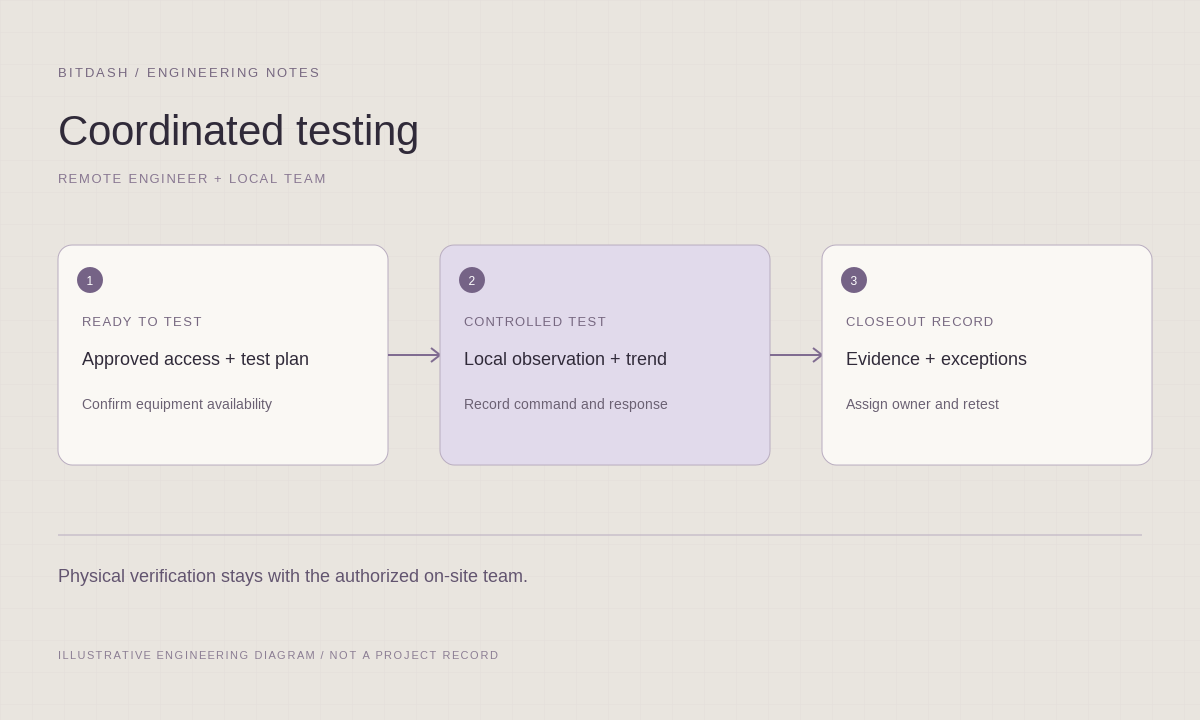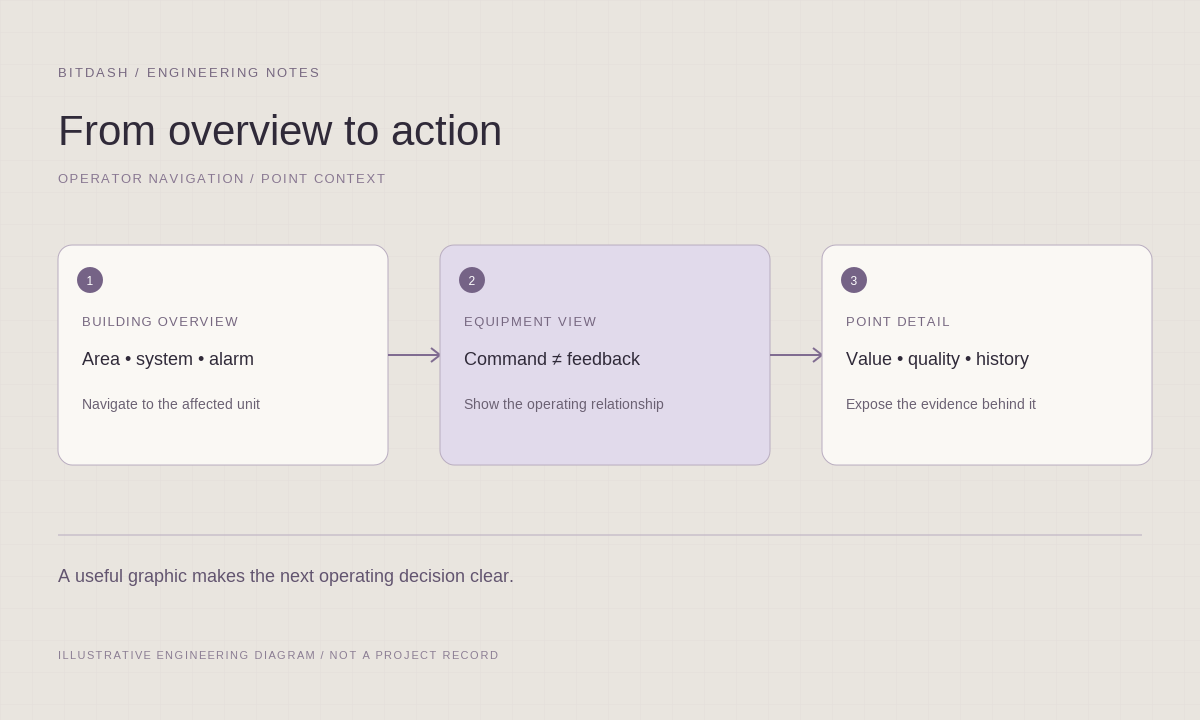
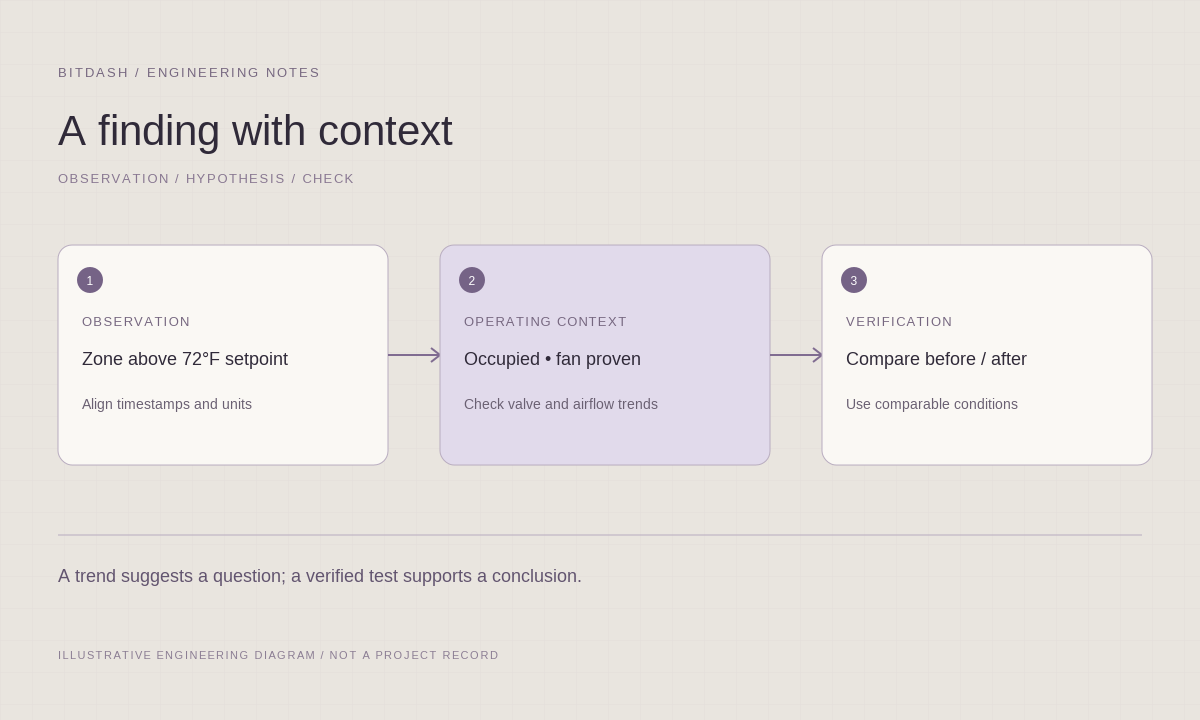
A trend is evidence to interpret. The sequence, operating conditions and field observations determine what it means.
Check the evidence before interpreting the pattern
Confirm point identity, engineering units, timestamp alignment, sample interval and gaps. Identify whether a value is measured, commanded or calculated. For temperature trends, use °F consistently and check that any conversion also applies to setpoints and alarm limits.
A smooth chart does not necessarily mean the source is reliable. Aggregation, interpolation, deadbands or a long collection interval may conceal events that matter to the investigation. Record the collection method and data limitations with the finding.
Put the equipment back into the picture
Compare the trend with the approved sequence, occupancy, equipment state and known maintenance activity. After-hours runtime may be expected during warm-up, an approved override or a special event. Heating and cooling overlap needs the operating context before it can be classified.
Start with a focused question and gather related points. For a suspected fan issue, command, proof, schedule, mode and any available drive status can be more useful together than one isolated trend. Ask the local team to verify physical measurements when the interpretation depends on them.
Make each finding useful to the next person
Describe the affected equipment, observation period, pattern and supporting evidence. State the proposed investigation or adjustment and identify the responsible reviewer. Separate confirmed observations from a suspected cause.
For historian-based workflows, storage settings influence the evidence available. Ignition’s documentation describes sampling, deadband and timer behavior, with history-provider capabilities depending on the configuration. Review the installed version and provider rather than assuming every project retains data in the same way.
Verify what changed
Agree the adjustment, preserve the change record and observe operation afterward. Compare equivalent conditions where possible and identify differences in weather, occupancy, schedules or plant loading. A changed trend may support a conclusion, but it does not automatically quantify energy savings.
Bitdash can support data readiness, rule configuration, dashboards and follow-through. A credible report shows what was observed, what action was approved and what the subsequent evidence can establish.
| Pattern | Context to collect | Useful next step |
|---|---|---|
| After-hours runtime | Mode, schedule, override and proof | Confirm whether operation was intended |
| Temperature instability | °F trend, setpoint, output and mode | Review sequence and field measurement |
| Persistent override | Owner, reason and change history | Agree disposition with the operator |
| Unexpected demand | Meter boundary, interval and operating load | Investigate comparable periods |
A practical review checklist
- Units, timestamps and collection settings are known.
- The finding includes equipment and operating context.
- Approved changes have a post-change observation plan.
Technical references
Platform and protocol context. Project requirements are confirmed against the installed equipment and approved design.
This guide describes an engineering approach. Final design values, testing responsibilities and deliverables follow the approved project scope.